Posts

Showing posts with the label academic achievement

Treat schizophrenia even if your teenager refuses

Image
Treat schizophrenia as you would any other serious medical illness in your teenager "My 18yr son is aggressive, hearing voices, and not sleeping." "Since the last two months he is not attending college. He talks to himself in his room and is not going out with his friends." "He feels he is being tracked through the TV and yesterday assaulted his mother when she put it on." "We tried taking him to our doctor but he refuses saying there is nothing wrong with him." This is a common introduction to the more severely ill teenagers presenting at Pathfinder Clinic. Why teenagers with schizophrenia refuse to see a psychiatrist  Teenagers refuse to see a psychiatrist for illness related and personal reasons Illness related factors Schizophrenia is a brain disease. Your teenager has difficulties recognising his own symptoms. In schizophrenia there are changes in brain structure, chemistry and functioning. The individual is unable to ...

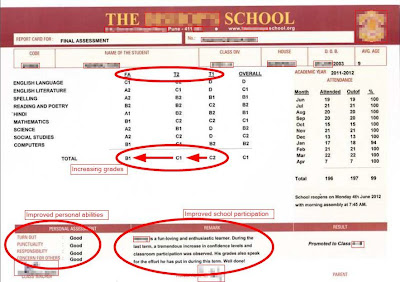
Mental Health and Academic Performance in Children

Image
10yr window to treat mental health problems affecting academic performance Mental health & academic performance Mental health has a direct impact on academic performance in children. Neglected childhood psychiatric disorders like ADHD and Learning Disorders adversely affect the child’s academic performance and educational attainment. Poor educational outcomes affect the child’s health, employment, and status as an adult. This is especially so for psychiatric conditions that are seen at 7 years and persist beyond 16 years of age. Mental health disorders in children have a greater impact on academic performance than chronic physical illness. The presence of a single mental condition results in morel board exams failures and backlogs. This association is more than for chronic illnesses of the neurological, lung, heart, or digestive systems. Physical impairments are not associated with exam failures. More than half the teenagers who fail to complete their secondary edu...

ADHD treatment improves academic performance

Image
ADHD treatment improves academic performance ADHD medication enhances academic performance when started early. ADHD drug treatment improves reading ability  in children with Attention Deficit Hyperactivity Disorder (ADHD) and Dyslexia. New research shows that drug treatment of ADHD also improves maths ability especially when started early - at least by the 4th standard. Children starting treatment a year or two later show progressively greater declines in academic performance. ADHD is characterised by inattention and hyperactive-impulsive behaviour . Parents who bring their children to the clinic are focused only on issues arising from the child's hyperactivity. Impairments due to inattention are not immediately apparent in the pre-school years. Depending on the severity of ADHD, inattention is unmasked when the child enters academic life in primary school or during the transitions to middle school, high school, and college. At each  of these...

Learning Disability - academic underachievement

Image
Impaired spelling and arithmetic in Standard 3 boy with Learning Disorder Learning Disorder (LD) is characterised by impaired acquisition of academic skills. This impairment in scholastic skills is not due to intellectual disability, physical disorders, emotional disturbances, or environmental, cultural, or economic disadvantage. There is a gap between ability and application. The child may know what is asked, is able to explain it verbally, but is unable to put it down in writing. Learning Disorder could affect any of the three scholastic Rs – R eading, w R iting or a R ithmetic. Types of Learning Disability Dyslexia – is the commonest learning disability (80%). It is marked by impairment of the ability to recognize and understand written words. Dyscalculia  – problems with doing math, understanding time, using money. Dysgraphia – problems with handwriting, spelling. Dyspraxia – problems with hand-eye coordination and balance, difficulties with fine motor skill...