Posts

Forgetfulness and Memory Loss at Work

Image
Memory loss results from disruption at any of these processes Forgetfulness and Memory Loss  Forgetfulness or failure to remember information , is a common complaint. All of us have at some time or the other forgotten to make that important call, to pick up some items from the store, an anniversary or birthday, or a colleague’s name. Students forget what they have “learnt” during exams. We often can’t remember where we have left our car keys, our wallet or that important document. Is it normal? And more importantly; when do we need to seek help? Forgetfulness or memory loss and difficulty concentrating are common symptoms of mental health disorders. This is specially so in depression, anxiety disorders, ADHD (Attention Deficit Hyperactivity Disorder), and dementias as shown in the examples below. A young working professional seeks help for increased forgetfulness and poor ability to focus at work. Further probing reveals decreased interest in doing things at work an...

OCD – Obsessive Compulsive Disorder

Image
What is OCD? OCD – Obsessive compulsive disorder – is a severe type of anxiety disorder involving obsessions and compulsions that affects the day-to-day functioning of a person. What are obsessions? Obsessions are thoughts, images, or impulses that occur over and over again; cause severe anxiety; feel outside the person’s control and affect the day to day functioning of a person. What obsessions are not Most of us know what it is like to be preoccupied with a thought, idea or even a person sometimes. These are not obsessions. They often give pleasure, usually pass off soon and do not affect our daily routine or work. Certain types of personality are also linked to a fastidious concern for details and “correctness”. However, this is not associated with anxiety and hence not an obsession. What are compulsions? Compulsions are repetitive behaviours aimed at decreasing the anxiety associated with the obsessions. What compulsions are not Not all repetitive behaviours are compulsions. Bedti...

ADHD and Me

Image
Hi. I’m Jai. I’m 8 years old. This is my story. My doctor says I have an illness. I don’t feel sick. But I do know that grown-ups around me are annoyed with me most of the time. I’m constantly being told, “sit still’’, “stop dreaming”, “pay attention”. I can’t seem to be able to do just that. In class, I seem to lose track of what the teacher says . I try to listen, I really do. I start doing what she says, then I notice the insect fluttering on the window pane, I see the boy in the row ahead tapping his fingers on the desk, the office boy walking down the corridor and the sound of laughter from the next classroom. I don’t realise I have left my seat till teacher tells me “Jai, return to your seat”. My parents are frequently called to school to meet my class teacher . They are unhappy with my marks. They think I’m careless and lazy because I take all evening to do my homework. I tell my mother that I try hard. I feel sad and frustrated that she doesn’t understand or believe me. So...

Dealing with Grief

Image
Dealing with grief is a process of acceptance Grief is the response to losing someone to death . All of us understand that death and loss of a loved one is a part of life. However, the reality of death often leads to feelings of shock, sadness and confusion. Acute grief occurs in the immediate aftermath of the loss. It is intensely painful characterised by sadness, crying, constant thoughts of the deceased, disturbed sleep, appetite and disinterest in one’s own self and others. In a majority of cases, this is followed by integrated or abiding grief in which memories of the loved one mingle with sadness and longing but it does not persistently occupy the mind or disrupt normal day-to day activities. “Well, everyone can master a grief but he that has it.” William Shakespeare. Much Ado About Nothing. III.ii.25 Loss through death affects each of us differently. How one feels depends on the nature and circumstances of the loss, one’s beliefs and religion, age, relationships and one’s ...

Mental Illness Myths and the Media

Image
Media portrayals of mental illness propagate prevailing myths and increase associated stigma. Media and Stigma Mass media – TV, cinema and newspaper – are the primary source of mental health information for the general public. The mentally ill are usually shown in poor light; and images of unkempt, violent and dangerous men predominate. This greatly affects the public’s view of the mentally ill, causing them to fear, avoid or discriminate against people with mental illness. This is even true for TV programs and stories for children. From an early age mental illness is seen as less desirable than other illnesses. Negative images such as these affect those with mental illness , damaging their confidence and self-esteem. It makes them more isolated and withdrawn and they are more likely to stay away from therapy. In one study, as many as 50% of patients reported that a negative media portrayal had a negative impact on their illness, with 34% saying that it directly led to a...

Aptitude Testing & Work Choice – evolutionary perspective

Image
Aptitude testing for responsible work choice Aptitude testing for career guidance has existed only since the 1930s . Aptitude testing was not needed until work choice became freely available about 200 years ago. Before that a person had no choice in his field of work. People trained for whatever their parents did. If they had access to patronage or money they could take up a profession. Now, with the concept of Right to Education, governments seek to extend career choice to all socioeconomic strata. With this new privilege of work choice comes the responsibility of choosing wisely. Aptitude testing takes into account abilities, personality, intelligence and motivation for making a career choice. Work choice a brief history For 10,000 years we did the work our parents did. In the initial millennia of mankind’s existence, work was necessary for survival. Primitive man was a hunter-gatherer to fulfil the biological need for food. As the first human settlements evolved man be...

Treat schizophrenia even if your teenager refuses

Image
Treat schizophrenia as you would any other serious medical illness in your teenager "My 18yr son is aggressive, hearing voices, and not sleeping." "Since the last two months he is not attending college. He talks to himself in his room and is not going out with his friends." "He feels he is being tracked through the TV and yesterday assaulted his mother when she put it on." "We tried taking him to our doctor but he refuses saying there is nothing wrong with him." This is a common introduction to the more severely ill teenagers presenting at Pathfinder Clinic. Why teenagers with schizophrenia refuse to see a psychiatrist  Teenagers refuse to see a psychiatrist for illness related and personal reasons Illness related factors Schizophrenia is a brain disease. Your teenager has difficulties recognising his own symptoms. In schizophrenia there are changes in brain structure, chemistry and functioning. The individual is unable to ...

Is your ADHD teenager ready for hostel?

Image
ADHD teens with appropriate life skills can live independently Does your  teenager with  ADHD have the life skills to survive in hostel? She did well in her 12th board exams and scored high in the CET. To attend the engineering college of her choice she has to move from home to a hostel in another city. Given her difficulty organising her daily schedule, would she be better off doing the same subjects at the local engineering college? The answer would depend on her personality and the life skills she has acquired. ADHD teenager personality types Teenagers with ADHD are of 3 character types: the optimistic, the terrified and the lost. They are placed into these categories depending on their productivity and anxiety (either too much or too little). The optimistic teen does not worry. He is excited about the independence that college life will bring, but may not realise that freedom comes with responsibilities (financial, social and personal). If he's still disor...

Work style and employee selection

Image
Use work style assessment to hire the best - and avoid the rest Work style is a combination of personality traits  that are relevant and specific to the workplace. Work style is highly predictive of job performance and employee behaviour. Differences in working style explain how people with similar knowledge, ability, goals, and desire to perform differ in the actual performance of their jobs. In today's complex business environment talent selection is critical and is at the top of a manager's list of priorities. Selecting employees for job-relevant personality traits improves job performance in the organisation. Work style and job performance Individuals differ in job performance despite having similar task abilities. The personality traits the individual brings to the organization along with abilities, interests, education, and experience, are responsible for this difference. Personality traits are a major contributor to variations in job performance. The...

ADHD Diet - practical family meals

Image
Practical ADHD diet for the family ADHD Diet A high-protein, low-sugar ADHD diet can help improve ADHD symptoms in children. Parents of children with ADHD are overwhelmed with dietary advice that is often time-consuming and disruptive to the household. However, this need not be so. Research shows it is feasible to incorporate an ADHD diet as part of an ongoing ADHD treatment program. Medication with behaviour modification is the backbone of ADHD treatment. A practical diet can be incorporated into the family routine to supplement ADHD treatment. High Protein Foods rich in protein - poultry, fish, eggs, beans, nuts , soy, mutton and low-fat dairy products (milk, paneer , cheese) - may have beneficial effects on ADHD symptoms. Protein-rich foods are used by the brain to make neurotransmitters, the chemicals released by brain cells to communicate with each other. Protein can prevent surges in blood sugar, which increase hyperactivity. Giving your child protein for brea...

Corex cough syrup - no more OTC opioid dependence

Image
Reducing codeine supply forces Corex users to the spiral of change Corex Cough Syrup opioid dependence Codeine cough syrup is no longer available over-the-counter (OTC) without a prescription. Record keeping by the dispensing pharmacist is now mandated by a new government notification. This one legislation will aid relapse prevention in abstinent Corex cough syrup addicts. Many former codeine addicts have relapsed after visiting their dispensary for another medication; the pharmacist casually offers opioid containing Corex cough syrup and provides a visual cue to trigger craving and retard their progress through the stages of change. Codeine cough syrup addiction is fuelled by dispensaries that distribute litres of codeine in the form Corex Cough Syrup and other brands like Mits Linctus. The key ingredient in these ‘cough syrups’, Codeine, is derived from opium and is an addictive substance . Codeine containing cough syrup ab...

Mental Health and Academic Performance in Children

Image
10yr window to treat mental health problems affecting academic performance Mental health & academic performance Mental health has a direct impact on academic performance in children. Neglected childhood psychiatric disorders like ADHD and Learning Disorders adversely affect the child’s academic performance and educational attainment. Poor educational outcomes affect the child’s health, employment, and status as an adult. This is especially so for psychiatric conditions that are seen at 7 years and persist beyond 16 years of age. Mental health disorders in children have a greater impact on academic performance than chronic physical illness. The presence of a single mental condition results in morel board exams failures and backlogs. This association is more than for chronic illnesses of the neurological, lung, heart, or digestive systems. Physical impairments are not associated with exam failures. More than half the teenagers who fail to complete their secondary edu...

What is normal? Dreams, the tiger and normality

Image
What is normal? A 22-year-old man jumped into the tiger's enclosure at the local zoo on Saturday and was mauled on his back, stomach and thighs. The previous night he had dreamt that he was to free the big cat and that it wouldn't kill him. "See, it didn't kill me," he said. Doctors treating him said, "he has received injuries but he would be well soon ... he was not suicidal." What is normal? The concept of normality is at the core of mental health. Without a concept of what is normal one cannot identify the abnormal. In this post we explore the concept of normality from a mental health point of view. Normality as Health The WHO has defined health as a complete state of physical, mental and social well-being and not merely the absence of disease or infirmity. Later they added spiritual well-being to the definition. So health is a positive state, not just the absence of disease. This concept looks at normality from a biological or medical...

Adult ADHD - Attention Deficit Hyperactivity Disorder at work

Image
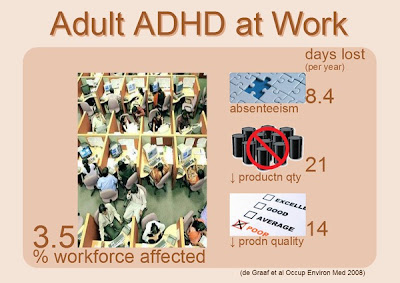
ADHD (Attention Deficit Hyperactivity Disorder) is thought to be a childhood disorder. However ADHD persists in adults in up to 50% of children diagnosed with the disorder. Hyperactivity, impulsivity and inattention; the hallmark symptoms of Attention Deficit Disorder in childhood  have been described earlier. In Adult ADHD, symptoms change to reflect the child's development into adulthood. The symptoms related to hyperactivity gradually disappear by adulthood; however, those related to inattention persist. Adults with attention deficit disorder (ADD) are often distracted, and avoid tasks requiring sustained mental effort. This impairs functioning at home and at work. Adult ADHD at work Adults with ADHD experience employment impairments at every level; from the initial job search, to the interview and then during the employment itself. People with Attention Deficit Disorder are more likely to be have poor job performance, l...

Irresponsible Drinking & Regulation

Image
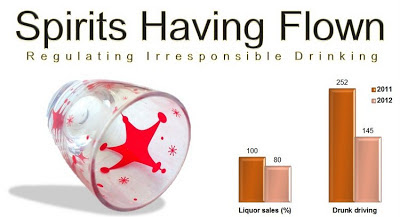
Irresponsible drinking requires regulation to modulate its potential for harm. There are specific neurotoxic effects of alcohol drinking . The responsible individual needs to learn personal skills to refuse alcohol drinking  when required to do so. The potential harm to society with irresponsible drinking and driving necessitates regulation at a societal level. Regulating irresponsible drinking Alcohol drinking and driving  in Pune over New  Year's eve was markedly reduced as compared to last year. This year 145 drunk driving arrests were made as against 252 last year. This reduction was despite an increase in the total number of  arrests made in Pune for irresponsible drinking and driving in 2012 as compared to the previous year. The heightened deployment of police personnel manning 30 prominent points of the Pune roads on New Year's eve was apparently deterrent enough. Alcohol drinking and liquor sales were down by 20-30% in S...