Posts

Conduct Disorder and Behaviour Problems in Children

Image
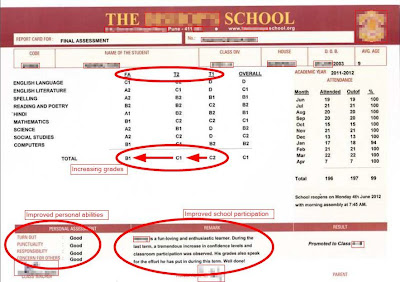
   Conduct disorder and behaviour problems in children  make the news when a 5-year old or a grandmother is killed while extorting money. Aggression in children  is just one of the offenses associated with conduct disorders . The seemingly lesser offenses of stealing in thousands from the home, or smoking 'weed' with their friends, pale in contrast. At the lowest end of the spectrum are those children who repeatedly confront authority in school or at home. Dubbed as 'monster kids' these children are viewed indulgently as being mischievous, naughty, 'bad', or 'delinquent'. Very seldom are they seen as having a mental health problem - a conduct disorder. What is Conduct Disorder? Behaviour problems that are persistent , violate the rights of others, go against societal norms, and disrupt family life, indicate a conduct disorder and merit psychiatric assessment. Conduct disorder is amongst the commonest childhood disord...
Alzheimer's caregiver techniques

Image
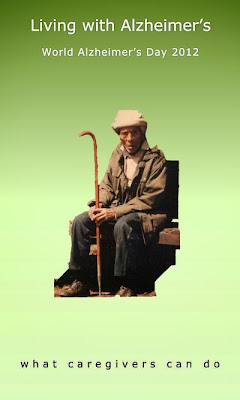
Caregivers living with persons having Alzheimer's Disease face specific problem behaviours. These behavioural problems result from memory loss that is the hallmark symptom of Alzheimer's. We have previously discussed resources giving hope for dementia caregivers . Caregiver  do's and dont's for mental illnesses  in general have also been highlighted. Living with Alzheimer's Disease is the theme for World Alzheimer's Day 2012. In this post we specify methods to help caregivers living with persons having Alzheimer's handle problems related to memory loss and reduce the burden of  care at home. Caregiver techniques for Alzheimer's Regular routine enables basic activities of daily living for a longer period of time. Make a visual time-table and regularly remind the person with Alzheimers to consult it so it becomes a habit. Keep large clocks in each room and remind them of the time at every opportunity. A personalised calendar wit...

Alzheimers disease - mild cognitive impairment countdown

Image
Alzheimers dementia is usually diagnosed when memory loss and behavioural symptoms are readily apparent to their caregivers. At this stage the primary concern is to slow further deterioration. Caregivers at the clinic have often wished they could have looked into the future. Many have a history of Alzheimers disease in their elderly and wondered whether there was an earlier way of knowing. New knowledge gives us hope in this direction. Alzheimers disease before memory loss We now have the beginnings of a time line in the countdown to dementia. It is now possible to trace the beginnings of Alzheimers Dementia up to 20 years before its manifestation with memory loss and impaired function. 20 Beta-amyloid levels in the cerebrospinal fluid (CSF)   begin to drop 20 years before the onset of dementia. Alzheimer's Disease is characterized by toxic deposition of specific beta-amyloid (Aβ1-42) plaques around the brain cells. In normal aging beta-amyloid...

ADHD treatment improves academic performance

Image
ADHD treatment improves academic performance ADHD medication enhances academic performance when started early. ADHD drug treatment improves reading ability  in children with Attention Deficit Hyperactivity Disorder (ADHD) and Dyslexia. New research shows that drug treatment of ADHD also improves maths ability especially when started early - at least by the 4th standard. Children starting treatment a year or two later show progressively greater declines in academic performance. ADHD is characterised by inattention and hyperactive-impulsive behaviour . Parents who bring their children to the clinic are focused only on issues arising from the child's hyperactivity. Impairments due to inattention are not immediately apparent in the pre-school years. Depending on the severity of ADHD, inattention is unmasked when the child enters academic life in primary school or during the transitions to middle school, high school, and college. At each  of these...

Sexual Dysfunction and Relationships

Image
The Erectile Dysfunction-Relationship Cycle Erectile and sexual dysfunction in an ongoing relationship usually reflects difficulties between the partners. Relationship problems  interfere with sexual feelings and cause or worsen erectile dysfunction.  Any experience that hinders the ability to be intimate, that leads to a feeling of inadequacy or distrust, or that develops a sense of being unloving or unlovable may result in erectile dysfunction.  Successive episodes of impotence are reinforcing. The man becomes increasingly anxious about his next sexual encounter. Erectile dysfunction is worsened by anticipatory anxiety about achieving and maintaining an erection interferes.  Sexual dysfunction interferes with pleasure in sexual contact and reduces ability to respond to sexual stimulation. Erectile Dysfunction in the relationship cycle In the early years of the relationship Lack of knowledge - there is a refractory period after sex ...

Cannabis, teenagers and schizophrenia

Image
Cannabis or marijuana use by teenagers and adolescents is highly associated with the onset of psychosis and schizophrenia. Cannabis goes by many names including hash , pot, grass, weed, or ganja . This gateway drug is falsely thought to be innocuous and as having no lasting effects. Cannabis use by teenagers is often not recognised as a problem. Cannabis is cheap and easily accessible in most student populations. Pune is a major hub for the cannabis drug trade. This week a quarter tonnne of ganja was found dumped in a well. Cannabis use is rampant in Pune colleges and hostels, where students assiduosly guard and maintain their 'stash'. During the 57th National School Games the highest number of students testing positive for marijuana came from Maharashtra. Regular cannabis use increases the risk for schizophrenia and psychosis by upto 4 times. There is increasing evidence that cannabis use can precipitate schizophrenia in vulnerable individuals. This is especially so...

Alcohol and Happiness - do they mix?

Image
Alcohol and happiness don't mix - definitely not when taken in excess, and definitely not in the long term. The relationship between adverse alcohol use and unhappiness is reciprocal - unhappy people tend to drink hazardously, and vice versa. This effect increases over time as demonstrated by a 15-year study that followed-up adult twins in 1975, 1981, and 1990. Passing out while drinking is significantly more likely in dissatisfied people Blackouts or passing out while consuming alcohol is an indication of unhappiness. Dissatisfied people are more likely to have a pattern of binge drinking. Binge drinkers are more likely to be dissatisfied with life. A pattern of binge drinking on weekends negates any beneficial effects of moderate alcohol use. Excessive alcohol use increases dissatisfaction and unhappiness. Alcohol, even in moderation does not reinforce feelings of well being, pleasure, happiness or joy. Moderate drinking does not reduce un...