Posts

Neurotoxic effects of alcohol on the adolescent and young adult brain

Image
(or why the 25 year age-bar on alcohol consumption could be reasonable) Does alcohol have specific neurotoxic effects on the adolescent or young adult brain? This question is the only important one for deciding whether the 25 year age-bar on alcohol consumption in Maharashtra is justifiable. While the debate rages two students from the premier medical college of India drowned in an alcohol fuelled swimming pool misadventure, and in an unrelated incident on the same night five inebriated youths were arrested for disturbing the peace in a residential area. We have seen how to recognise problem alcohol drinking in teenagers , and how to refuse alcohol . This article probes the specific effects of alcohol on the maturing brain. Infancy Alcohol is a neurotoxin. It distorts the normal architecture of the developing brain. This distortion starts during pregnancy when imbibed maternal alcohol crosses the placenta into the foetus. In the foetus alcohol acts on the specially vulnerab...

School bullying

Image
Bullying by children in schools has serious mental health effects on the victim and the bully. Up to 25% of high school students report being victimised by bullies. 13% of victims have considered suicide. In rural India 31% of middle school students report being bullied (Kshirsagar 2007). Bullying is twice more prevalent in coeducational schools than in girl schools. The prevalence of bullying increases from 13% in the 3rd grade to 46% in the 6th grade. Bullying is higher in classes with more retained students. Bullying occurs in a variety of settings that are an extension of your child's school life. Bullying can occur face to face, by texting or on the web (cyberbullying). Bullying is not a phase of growing up, it is not a joke, and it is not a sign that boys are being boys. Bullying can cause lasting harm - to the victim, the bully and the bully-victim (children who are bullied and also bully other children). Bullying takes many forms Verbal : Name calling, teasing ...

Quit Smoking for World No Tobacco Day (31-May)

Image
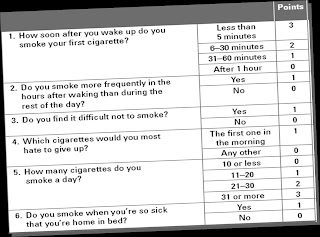
Fagerstrom Test for Nicotine Dependence Quitting tobacco is the most important thing you can do to protect your health (AHRQ) Quitting by willpower only 40% of smokers try to quit each year . The success rate of those who quit on their own is about 5% and with self-help books it is about 10%. Most smokers make 5-10 attempts to quit. Unsuccessful attempts to quit are a sign of nicotine dependence. 85% of current daily smokers are nicotine dependent Signs of nicotine dependence Tolerance - Increasing the number of cigarettes smoked per day (Most smokers escalate to a pack) Withdrawal - Mood changes, irritation, anxiety, insomnia, restlessness when unable to smoke Loss of control - Most smokers do not intend to continue, but 5 years later 70% do Increased time spent using the drug - Leaving office/ work-site to smoke Continued use despite harm - cough, hypertension, heart disease Giving up important activities - air travel Are you nicotine dependent? Take the Fagerstrom Te...

Police suicides

Image
Five police constables from Pune committed suicide this year. Suicide by police personnel the world over has been extensively reported. It is generally known that the occupation is stressful and associated with psychological stressors that make personnel prone to suicide. However, there is a marked variance in reported rates and stressors. Local factors may overshadow any generalisations even within the country. For instance, in the US/Europe firearms are the most common suicide method used by police (61-77%), but in Pune hanging was the only method used. Sources of stress in police personnel There is conflicting evidence as to the extent to which police constitute a high risk group for suicide . A study of well-being in police at Bangalore showed they were were better adjusted and had a better quality of life than comparable middle class urban factory workers (Geetha 1998). However, they had poorer social contact and support beyond the immediate family. This was attributed to their...

Treatment of social anxiety, phobia and self-consciousness

Image
Avoiding social situations because they make you self conscious and anxious? You are likely to have a social phobia or social anxiety disorder. One in 10 persons experiences social phobia between the age of  9-33years. The incidence is highest in adolescence (Beesdo et al 2007). Men and women are equally likely to suffer. However, men are more likely to seek treatment when their performance at work is impaired. Social anxiety usually begins in childhood or early adolescence . There is often a history of childhood shyness. A stressor or humiliating social experience can precipitate the problem. In fact paediatric social phobia affects 5-10% of children. In children it is often associated with ADHD (Attention Deficit Hyperactivity Disorder), depression or separation anxiety disorder. Longstanding social phobia increases the risk of depression, substance abuse, and alcoholism later in adulthood. Recognising social phobia “My mind went blank during the interview. I break ...

Sleeplessness, sleep disturbances, insomnia and parasomnias

Sleepless in Pune. Sleeplessness, disturbed sleep, and shift work related sleep problems are interfering with our citizens recovery after a hard days (nights) work. Insomnias and parasomnias are common sleep problems. Once recognised these are treatable. Does it take you more than 30 minutes to fall asleep at night? Do you wake up too early or frequently at night and have difficulty going back to sleep? Do you feel groggy and lethargic when you wake up? Do you feel drowsy during the day? Do you depend on coffee to get through the day? If you answer "yes" to any of the above questions; you have a sleep problem. You are not alone. 9-18% of adults suffer from treatable insomnia What is insomnia? The inability to fall asleep or remain asleep is insomnia (Latin for ‘no sleep’). In a broader sense insomnia is the inability to get the amount of sleep you need to wake up feeling refreshed. How much sleep do you need? As a rule of thumb an adult requires 7-...

Exercise addiction - distorted pursuit of attractiveness?

Image
Overexercising - obsessive weight-lifting or running, compulsive gym routines , or psychological dependence on exercise - is an illness. The health and fitness benefits of exercising are undeniable. However by overexercising the distorted pursuit of attractiveness takes precedence over fitness. Exercise addiction indicates a body image disorder ; a distortion of the individual's mental representation of his or her own body. When I first commented on this phenomenon in 2001 body image disorders were a rarity in India (Misquitta 2001). Pune is fascinated with its physique . Witness the mushrooming gyms and spas in every neighbourhood. Men dissatisfied with their appearance throng them to reduce or gain weight in pursuit of an ideal muscularity depicted on huge sports hoardings. An 18 year old ‘hunk’ is ashamed to wear T-shirts convinced his pectorals are too thin. He has no time to left to socialise at the end of his daily 5-hour workout. Women join gyms to lose weight and at...

Relationship conflict and strain in youth

Image
Some relationships are characterised by conflict and strain and this can be detrimental to mental health in youth. Romantic relationships are important for mental health during the transition from adolescence to adulthood. Satisfaction in the relationship is strongly related to regard and empathy with the partner (Cramer 2003). Intimacy increases positive feelings in the relationship. The perceived quality of a relationship depends more on the presence of intimacy than on absence of conflict (Laurenceau 2005). We have already noted the various the reactions to breakup of relationships. We now take a look at some psychological aspects of conflict and strain in ongoing relationships of young persons. Gender aspects of ongoing relationships For a young woman an ongoing and current relationship is associated with feelings of psychological well-being. For her just being in a romantic relationship provides a social identity and increases feelings of self- worth. This need to be in...

Breakup of romantic relationships in youth

Image
Breakups in non-marital relationships are a source of stress in youth . Breakups are a major reason for self-referral at the Clinic. Stress arises from conflict in daily interaction between the couple and peaks at the time of breakup. The individual’s reaction to breakup of the relationship depends on his or her attachment style . Reactions to breakup depend on individual attachment style There are four attachment styles displayed in relationships . These attachment styles are delineated based on the individuals capacity for intimacy  (interest in and comfort with closeness and interdependence) and independence (less dependence on partner’s approval, and reduced anxiety about abandonment) (Bartholomew and Horowitz, 1991). How do individuals react during a breakup? Intense reactions occur in those individuals whose partners terminated the relationship, those who were more emotionally involved in the relationship, and those high in attachment anxiety. Emotionally secure i...

Anger management can save your life

Image
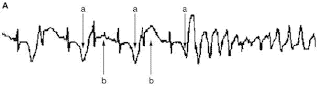
Anger induced electrical changes in the heart Anger management can save your life . Anger can place you at high risk for developing  electrical abnormalities in the heart tissue. These electrical abnormalities are strongly associated with subsequent heart attacks. The chances of surviving an out-of-hospital heart attack are not good. Anger control can save your life by reducing the risk of an out-of-hospital heart attack (Rashba, Lampert 2009). Why we need the emotion of anger Charles Darwin was the first to note the universality of anger and other facial expressions of emotion. He viewed this as evidence that emotional signals like anger have been stamped by evolution into the central nervous system. Anger has an essential survival function. Anger needs to be controlled or managed for it to be effective. Anger management strategies These are strategies to change your attitude to the expression of anger, as also immediate and long term behaviours to control anger. Focus a...